ExoHub featured in Trends-Tendances
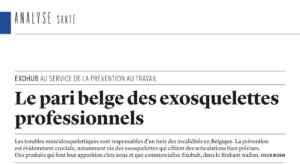
The business magazine Trends-Tendances recently featured an article on ExoHub, our Belgian company specializing in the distribution and integration of professional exoskeletons.
This highlighting confirms the growing interest of Belgian companies in solutions aimed at reducing physical strain at work, preventing musculoskeletal disorders (MSDs), and sustainably improving operators’ working conditions.
But beyond this media recognition, a question arises: why are professional exoskeletons experiencing such a boom in Belgium today?
Musculoskeletal Disorders: A Major Challenge for Businesses
Musculoskeletal disorders represent one of the main causes of absenteeism and disability in Belgium.
Lower back pain, shoulder problems, tendinitis, and disorders related to repetitive movements affect thousands of workers daily in sectors as varied as:
- industry;
- logistics;
- construction;
- the pharmaceutical sector;
- healthcare;
- agriculture;
- technical services.
Beyond human suffering, these pathologies also generate significant costs for companies in terms of absenteeism, staff replacement, and loss of productivity.
What is a professional exoskeleton?
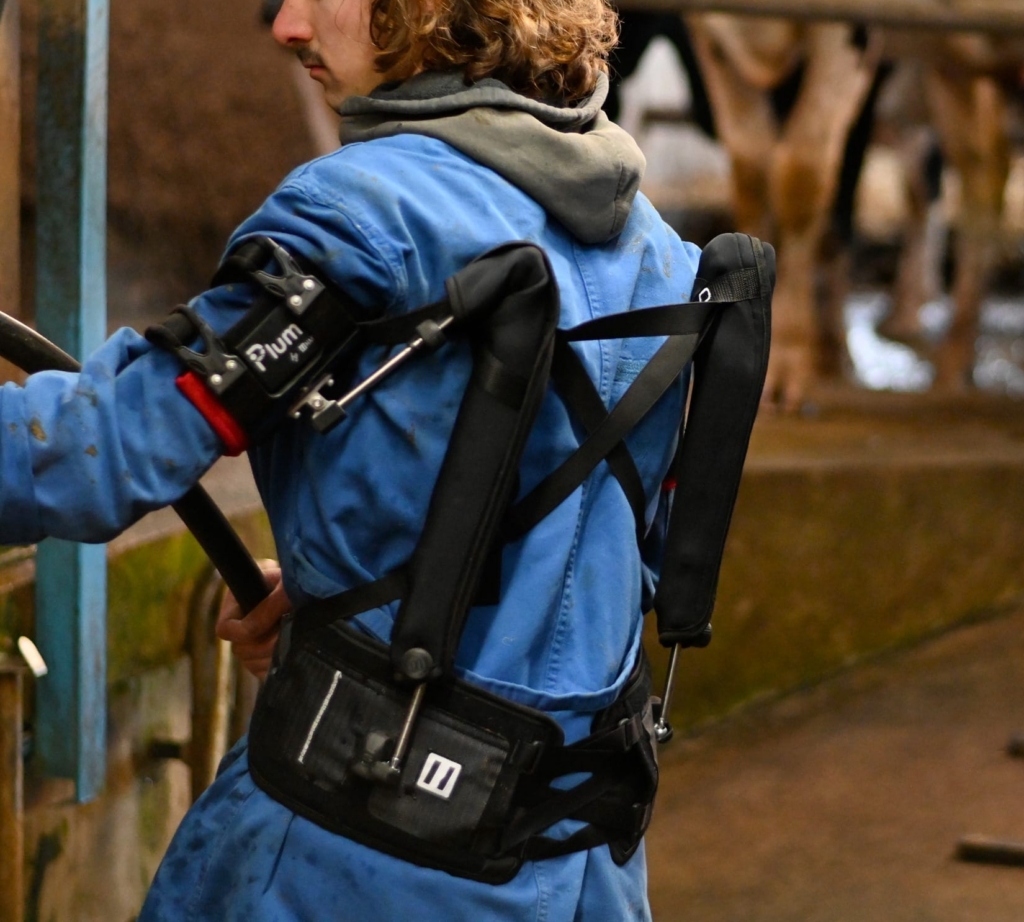
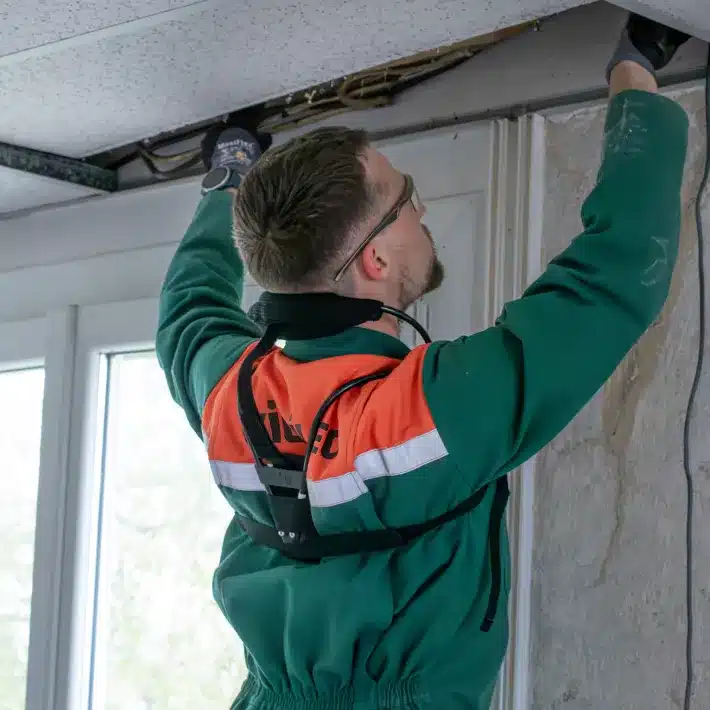
A professional exoskeleton is an ergonomic device designed to assist the human body during certain physical tasks.
Contrary to the futuristic image often conveyed by the term “exoskeleton,” it is not a robot replacing humans.
On the contrary, the objective is to support the worker’s natural movements in order to:
- reduce biomechanical stress;
- decrease physical fatigue;
- relieve certain joints;
- improve comfort at work;
- limit the risk of injuries.
Depending on the tasks performed, different types of exoskeletons can be used to support the back, shoulders, arms, or legs.
A Field-Needs-Centric Approach
At ExoHub, we are convinced that there is no universal exoskeleton.
Each profession presents specific constraints, and each worker has their own physical characteristics.
That is why our role is not limited to distributing equipment.
We support companies at every stage:
- needs analysis;
- ergonomic assessment;
- field trials;
- selection of the most suitable solution;
- deployment support;
- post-installation follow-up.
The objective is to ensure relevant and effective use of the exoskeleton as part of a global ergonomic approach.
Which sectors are already using exoskeletons?
Exoskeletons are no longer reserved for large industries.
Today, they are used in many professional environments:
- Industry and Production: For handling tasks, strenuous postures, or repetitive operations.
- Construction: To reduce physical strain related to working at heights, carrying loads, or tasks requiring uncomfortable and/or prolonged positions.
- Logistics: To assist operators during order preparation and handling operations.
- Pharmaceutical Sector: To improve the comfort of operators working long hours standing or performing repetitive gestures.
- Healthcare: Certain devices are also used in medical or paramedical contexts.
An Investment in Prevention
Exoskeletons should be considered a prevention tool, not a miracle solution.
Integrated into a global approach to improving working conditions, they can contribute to:
- reducing physical fatigue;
- improving employee well-being;
- limiting certain ergonomic risks;
- promoting job retention;
- reducing costs associated with long-term absences.
For many companies, the stakes today go beyond simple productivity: it’s about sustainably preserving team health.
ExoHub: Supporting the Widespread Adoption of Exoskeletons in Belgium
The article published by Trends-Tendances highlights a reality we observe daily in the field: interest in professional exoskeletons is growing rapidly in Belgium.
Our ambition is simple: to make these technologies accessible to companies of all sizes and to support their integration in a pragmatic and effective way.
Exoskeletons do not replace humans.
They simply allow them to work in better conditions, for longer, and with fewer physical constraints.
Would you like to discover the exoskeletons adapted to your activity?
Contact ExoHub to arrange a demonstration or an ergonomic analysis of your workstations.