Exoskeletons aren’t just for the automotive industry
During our radio appearance in Antipode’s SME segment, one question came up regularly: which jobs can really use an exoskeleton?
Many people still imagine that exoskeletons are reserved for large factories or military applications.
The reality is very different.
Today, professional exoskeletons are finding their place across many sectors and address a wide range of challenges: manual handling, awkward postures, overhead work, prolonged standing, or reduced mobility.
The goal isn’t to replace the worker, but to help them do their job in better conditions.
How do you know whether a job can benefit from an exoskeleton?
The question is less about the job itself than the physical constraints linked to the tasks performed.
Exoskeletons can be relevant when work involves:
- repetitive movements;
- frequent manual handling;
- uncomfortable postures;
- arms held up high;
- long periods of standing;
- significant walking;
- significant physical fatigue.
Let’s look at a few concrete examples.
Industry: reducing physical strain from repetitive tasks
Industry remains one of the main sectors using exoskeletons today.
Operators are often faced with:
- repetitive actions;
- manual handling;
- assembly operations;
- maintenance work.
In these situations, some exoskeletons can help reduce the strain placed on the back, shoulders, or arms.
Construction: easing physically demanding work
The construction sector includes many situations where physical constraints are particularly high.
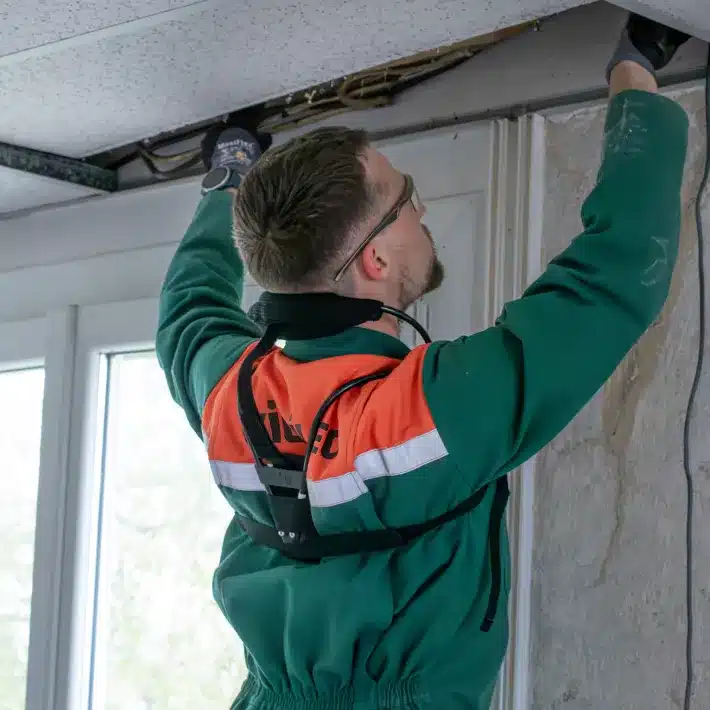
Roofers, electricians, drywall installers, painters, and HVAC technicians regularly carry out tasks involving:
- overhead work;
- carrying loads;
- awkward postures;
- frequent movement.
Exoskeletons can then be an interesting addition within a broader prevention approach.
Logistics: supporting manual handling operations
In warehouses and logistics centres, order pickers sometimes perform several hundred movements per day.
Repeating these actions can cause fatigue and increase the risk of musculoskeletal disorders.
Some solutions help reduce the strain associated with lifting movements or repeated handling.
Pharmaceutical sector: improving operator comfort
Belgium has a particularly well-developed pharmaceutical ecosystem.
Production operators often work in highly regulated environments where certain tasks can be repetitive or require prolonged standing.
Exoskeletons can help improve working comfort in certain specific roles.
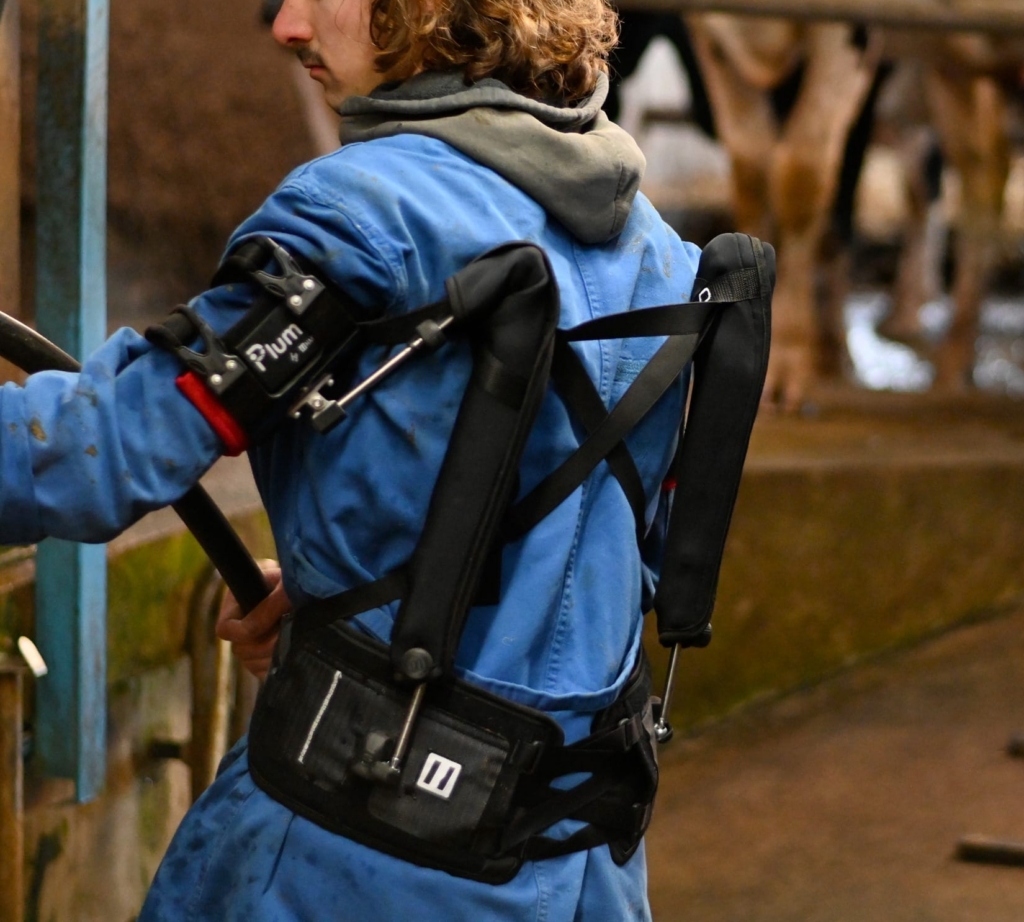
Agriculture and horticulture
Agriculture professionals carry out physically demanding tasks every day.
Ground-level work, manual handling, harvesting, or crop maintenance place significant demands on the body.
Interest in exoskeletons is also growing in this sector, where physical strain remains a major reality.
Technical services and maintenance
Maintenance technicians often work in complex environments.
They may need to work:
- in confined spaces;
- overhead;
- in uncomfortable positions;
- for several hours in a row.
Some technologies provide targeted support in these situations.
Healthcare and care homes
Caregivers are among the professions most exposed to physical constraints.
Patient transfers, daily handling, and long days on your feet can lead to significant fatigue.
Several solutions are now being studied to support professionals in the care sector.
Local authorities and public services
Municipal workers, technical staff, maintenance teams, or parks and green-space services also carry out many physically demanding tasks.
The use of exoskeletons is gradually starting to be assessed in these environments to improve working conditions and support job retention.
Can exoskeletons help people who already suffer from pain?
In some cases, yes.
Some solutions are used by people living with chronic pain or returning after a long period of absence.
However, every situation is unique.
A prior assessment remains essential to determine whether a solution is suited to the user’s needs.
Do all jobs need an exoskeleton?
Absolutely not.
The goal isn’t to equip all workers with an exoskeleton.
Like any professional equipment, it must address a clearly identified issue.
In some situations, an ergonomic improvement to the workstation will be more relevant.
In others, the exoskeleton can be a particularly valuable complementary solution.
The ExoHub approach
At ExoHub, we never start with the technology.
We start in the field.
Every company, every job, and every role comes with specific constraints.
Our role is to understand these constraints, analyse the real needs, and identify the most suitable solutions among the different technologies available.
Conclusion
Professional exoskeletons now apply to far more jobs than you might think.
Industry, construction, logistics, pharmaceuticals, agriculture, maintenance, healthcare, or public services: whenever an activity creates significant physical strain, it can be relevant to assess the value of an exoskeleton.
So the question isn’t: “Can my job use an exoskeleton?”
The real question is:
“Could some tasks in my job be done with less fatigue and fewer physical constraints?”
Want to know whether an exoskeleton could be useful in your activity?
ExoHub specialists support you in analysing your workstations and identifying the most suitable solutions.