A technology still surrounded by misconceptions
In a report dedicated to ExoHub, Sudinfo wrote:
“An exoskeleton is not Robocop”
A phrase that perfectly summarizes the reaction we still regularly encounter when presenting our solutions to new companies.
For many people, the word “exoskeleton” immediately evokes science fiction films, giant robots, or futuristic armor capable of multiplying human strength.
However, the reality is quite different.
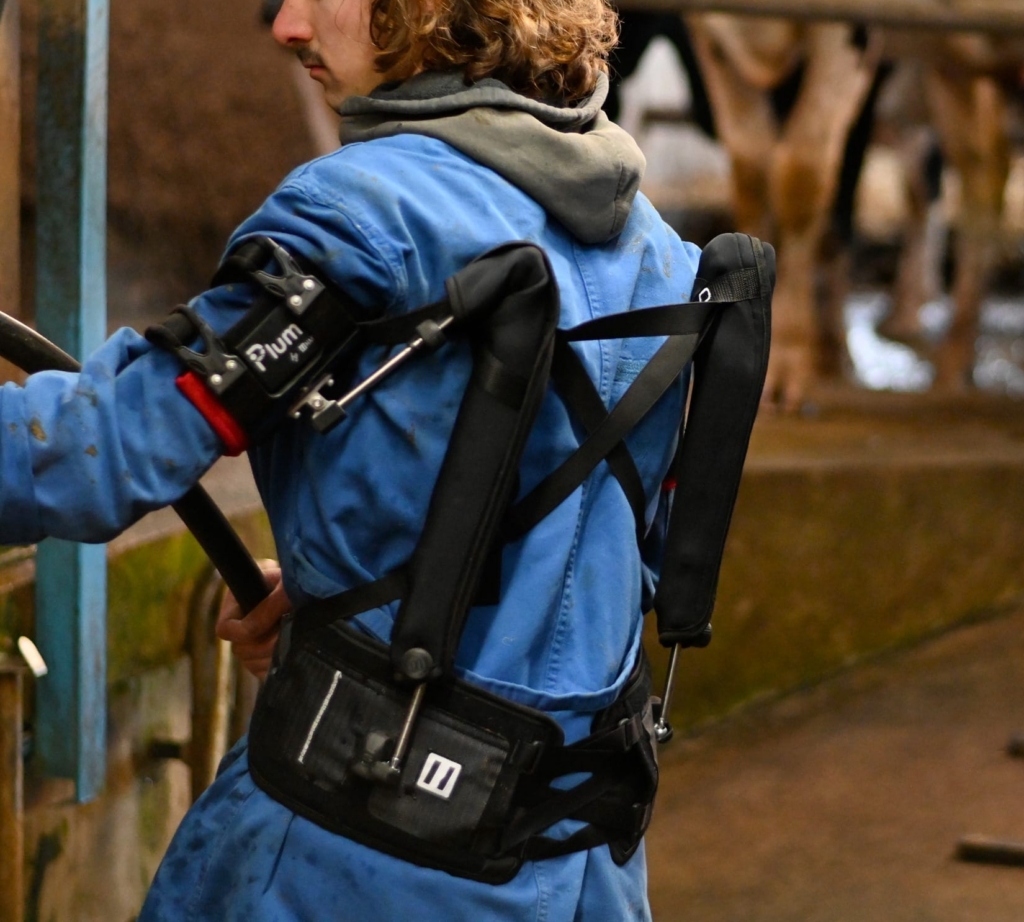
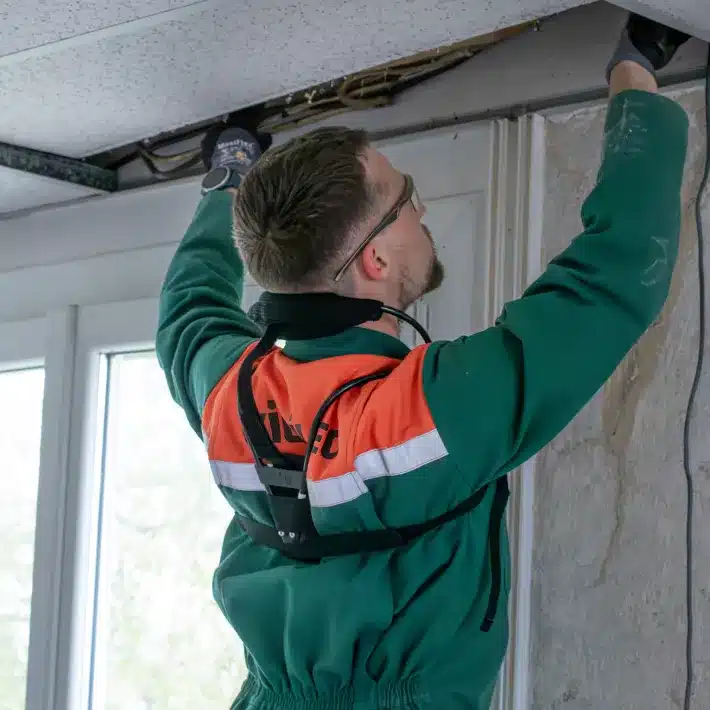
Professional exoskeletons used in companies today are ergonomic tools designed to reduce certain daily physical strains.
What is a professional exoskeleton?
An exoskeleton is a wearable device designed to assist certain movements or reduce the strain exerted on specific parts of the body.
Depending on the model, it can help relieve:
- the lower back;
- the shoulders;
- the arms;
- the legs;
- specific joints under high stress.
The goal is not to make a worker stronger.
The goal is to allow them to work with less fatigue and fewer physical constraints.
Exoskeletons do not replace workers
One of the fears sometimes expressed concerns the replacement of humans by technology.
However, exoskeletons were not designed with this in mind.
They do not perform any tasks in the user’s place.
They do not make any decisions.
They do not replace any skills.
They simply support body movements to reduce certain muscular or joint stresses.
The worker’s experience and expertise remain at the center of the process.
Why are companies interested in them?
Exoskeletons are attracting so much attention today because they address several major challenges faced by companies.
These include:
- the increase in musculoskeletal disorders;
- the aging of the active population;
- recruitment difficulties;
- the increase in long-term absences;
- the need to preserve internal skills.
In certain professions, physical strain is a real issue for performance and health.
Companies are therefore looking for new solutions to protect their employees in the long term.
In which professions are exoskeletons used?
Contrary to popular belief, exoskeletons are not reserved for automotive factories.
Today, they are used in many sectors.
- Industry: For production, maintenance, or handling operations.
- Construction: For work requiring heavy lifting or prolonged interventions with arms raised.
- Logistics: To relieve certain constraints related to order picking or handling.
- Pharmaceutical: To improve the comfort of operators performing repetitive tasks or standing for long periods.
- Agriculture: To reduce the physical strain of certain tasks.
- Technical Services: For maintenance, cleaning, or installation teams.
Active or passive: what are the differences?
Not all exoskeletons function in the same way.
Passive exoskeletons generally use mechanical systems, springs, or specific materials to redistribute effort.
Active exoskeletons, on the other hand, incorporate motorized assistance to provide additional support.
At ExoHub, our range now covers a wide variety of needs, with solutions ranging from approximately €400 to €4,700 depending on the applications and technologies used.
One solution among others
It is important to remember that an exoskeleton is not a silver bullet.
The prevention of professional risks is based primarily on:
- ergonomics;
- work organization;
- training;
- workstation improvement;
- adapted equipment.
The exoskeleton complements this approach when it addresses a clearly identified issue.
Why test before investing?
Every job is different.
Every user is different.
An exoskeleton that is very effective in an industrial environment will not necessarily be suitable for a maintenance activity or a logistics position.
This is why field trials are essential.
They allow for a concrete evaluation of:
- comfort;
- user acceptance;
- compatibility with the tasks performed;
- benefits observed in the field.
A technology that is rapidly becoming more accessible
Only a few years ago, exoskeletons seemed reserved for a few pilot projects.
Today, they are gradually being integrated into the prevention strategies of many companies.
This evolution is explained by a better understanding of their benefits but also by an offer that has become more accessible.
Exoskeletons are no longer science fiction.
They are gradually becoming full-fledged work tools.
Conclusion
No, an exoskeleton is not Robocop.
It is, above all, equipment designed to help workers perform their jobs in better conditions.
When correctly selected and integrated, it can contribute to reducing fatigue, improving comfort, and supporting the prevention measures put in place by companies.
Would you like to discover specifically what an exoskeleton can bring to your teams?
ExoHub supports you in the selection, testing, and integration of the solutions best suited to your activity.